This is the fifth and final post in our five-part Network Cable Testing educational series.
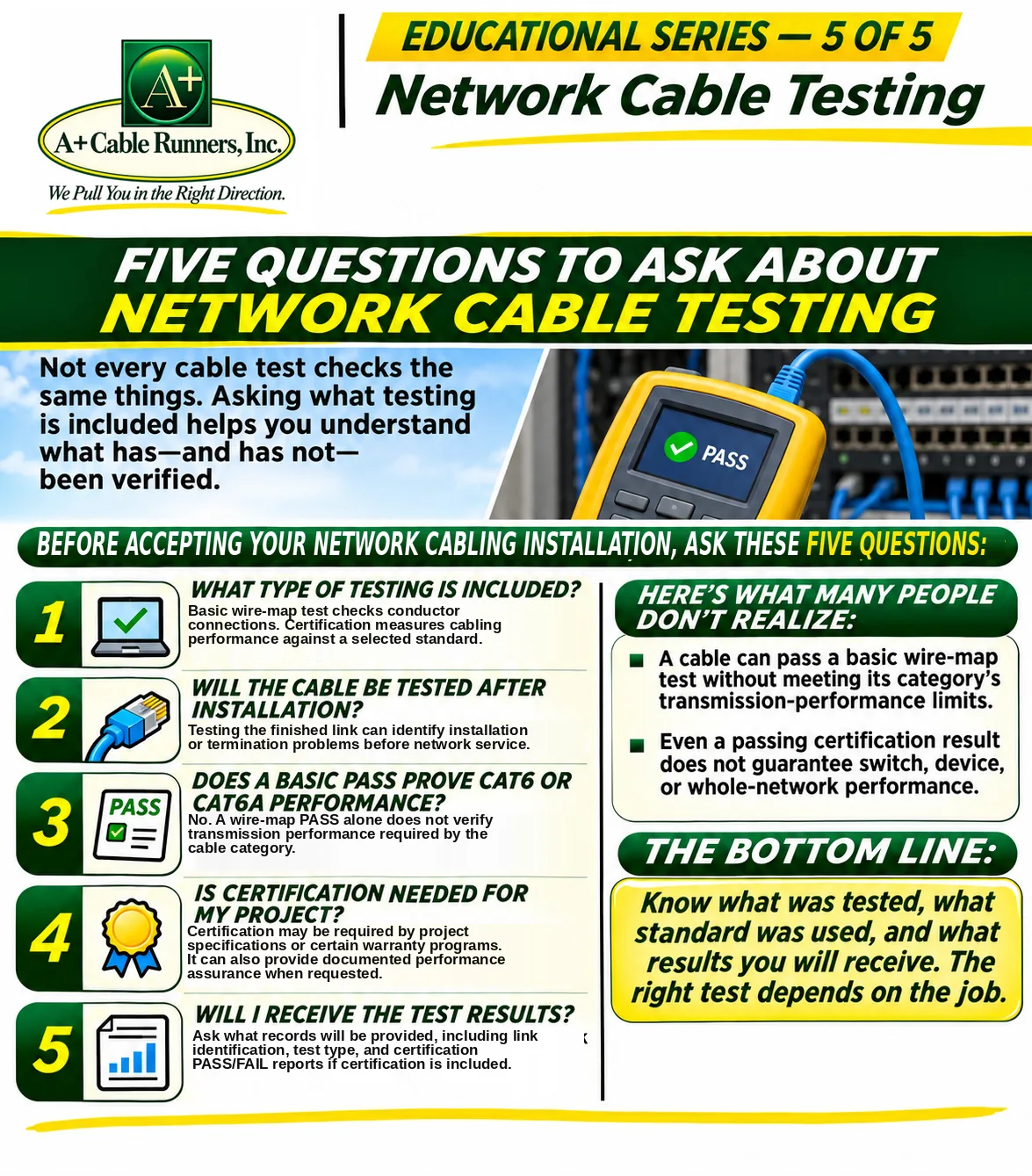
Not every cable test checks the same things. Asking what testing is included helps you understand what has, and has not, been verified. Before accepting your network cabling installation, ask these five questions.
1. What type of testing is included?
A basic wire-map test checks conductor connections. Certification measures cabling performance against a selected standard. Part two of this series, Basic Testing vs. Certified Testing, compares the two side by side.
2. Will the cable be tested after installation?
Testing the finished link can identify installation or termination problems before the network goes into service.
It also helps to ask what will be tested. Fluke Networks, which makes cable test equipment, describes the permanent link as the fixed cabling, not including the patch cords at the ends. A channel test includes the patch and equipment cords that will be used in the final installation.
3. Does a basic PASS prove Cat6 or Cat6A performance?
No. A wire-map PASS alone does not verify the transmission performance required by the cable category. Part four, Why a Cable Can Pass Basic Testing and Still Have Problems, covers what a basic test can miss.
4. Is certification needed for my project?
Certification may be required by project specifications or certain warranty programs. It can also provide documented performance assurance when requested. Fluke notes that cabling manufacturers require certification to issue a warranty, so if a manufacturer warranty is part of your plans, settle the testing before the work starts.
5. Will I receive the test results?
Ask what records will be provided, including link identification, test type and certification PASS/FAIL reports if certification is included. Part three, Cable Certification: Going Beyond a Simple Pass, explains what to look for on a report, including the category and the edition of the standard.
Here's what many people don't realize
- A cable can pass a basic wire-map test without meeting its category's transmission-performance limits.
- Even a passing certification result does not guarantee switch, device or whole-network performance.
The bottom line
Know what was tested, what standard was used and what results you will receive. The right test depends on the job.
If you are comparing bids before the work starts, our post on six questions to ask when comparing cabling bids puts testing alongside cable, routing and warranties. To start this series from the beginning, read part one, Your Network Cable Works, But Was It Tested? Next, our fiber series begins with Fiber Optic Splicing: Why Proper Terminations Matter. To see the cabling work we do, visit our computer network cabling page.
Educational information only. Cabling requirements and performance depend on the installation, equipment, applicable standards and intended application. This is not a substitute for project-specific design or engineering. Always follow applicable codes and manufacturer instructions, and verify project requirements individually.