Low Voltage Contractor in Tampa Bay

Network cabling, fiber, security cameras and the rest of a building's low-voltage systems, installed by a Florida State Certified contractor (ES12001361) since 2001.
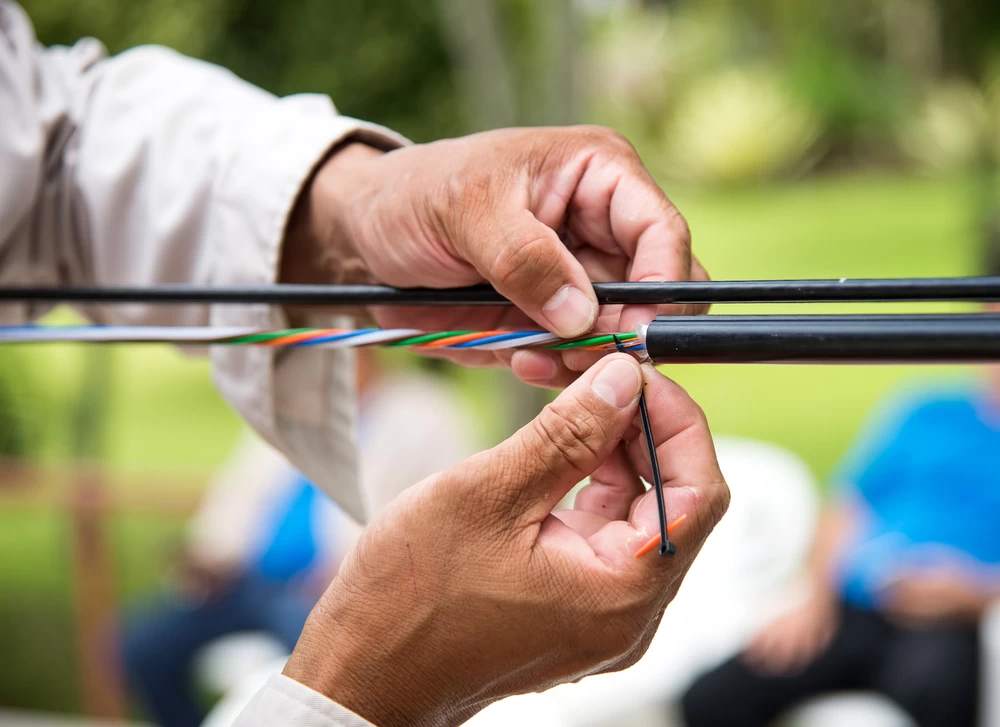
Technician preparing fiber optic cable strands

What low voltage covers

Low-voltage systems are the data, communication, audio/video, camera and access control wiring in a building, as opposed to the electrical wiring that carries power to outlets and lights. A+ Cable Runners holds Florida contractor license ES12001361 and handles permitting when a job needs it.

  • Network cabling: copper Cat5e, Cat6 and Cat6A from every desk, access point and camera back to the network closet.
  • Fiber optic cabling: backbones between closets, floors and buildings.
  • Security cameras, including Verkada, and access control infrastructure.
  • Audio and video cabling.
  • Cabling for VoIP phone systems.
  • Sound masking for open offices.
  • Digital TV antennas.
  • Cellular internet failover, so phones, cameras and payments keep working when your internet provider goes down.

New construction and remodels

Low-voltage cabling is easiest and cheapest to install before walls and ceilings close up. During a remodel or a build-out, planning cable paths, network closet space and power for devices early saves pulling cable through finished walls later.

Storm season

Florida has more lightning per square mile than any other state, and low-voltage equipment can be what fails after a storm: a camera on a pole, a switch with dead ports. Cables to outdoor devices and copper between buildings are common paths for surges, along with the power and service lines coming into the building, so surge protection and fiber between buildings matter here.

Selected projects

  • Sheraton Sand Key Resort, Clearwater Beach: structured cabling throughout the floors during the resort's remodel, with a new 6-strand single-mode fiber optic backbone.
  • KnowBe4, Clearwater: structured cabling across four floors, including OM4 multimode fiber optic infrastructure between floors.
  • ZooTampa at Lowry Park, Tampa: structured network cabling, fiber optic cabling, Verkada security camera systems and access control infrastructure.

Tell us about the job

A six-month build and a one-day job need different answers. Pick the one that fits.

Send a project to bid Request service

Or call (727) 647-0961

FAQ

The installation of a building’s communication and security wiring: network cabling, fiber optics, security cameras, access control, and audio and video, as opposed to the electrical wiring that powers outlets and lights.

Almost every business with a network, phones or cameras. Our projects include a resort, four floors of an office building and a zoo, and we work for businesses, IT providers and government agencies across Tampa Bay.

Yes. We install new systems and upgrade existing cabling and equipment, and we can test what you have to see what needs replacing.

Organized, labeled and tested cabling means faster troubleshooting, fewer outages from pulled or damaged cables and, with spare capacity planned in, room to add connections without rewiring.

Low-voltage cabling carries data, video and small amounts of power to devices such as cameras, phones and access points. Electrical wiring carries line-voltage power to outlets, lights and equipment. They fall under different sections of the electrical code, and in Florida low-voltage work can be done under a separate limited-energy specialty license.

Usually, yes. We look at what you have, what you want to add and whether the existing cabling and equipment can support it.

Yes. We test installations against industry standards, including fiber and Cat6A testing for loss, length and performance.

Well-installed cabling usually lasts many years and outlasts the equipment plugged into it. That is why choices like Cat6A on key runs can pay off over the life of a building.

The cabling itself is not where energy is saved. What it does allow is powering devices such as cameras, phones and access points through the network cable instead of a separate outlet at each device.

Yes. We plan low-voltage systems for new construction and remodels, ideally before walls and ceilings close, when cable is easiest to install.