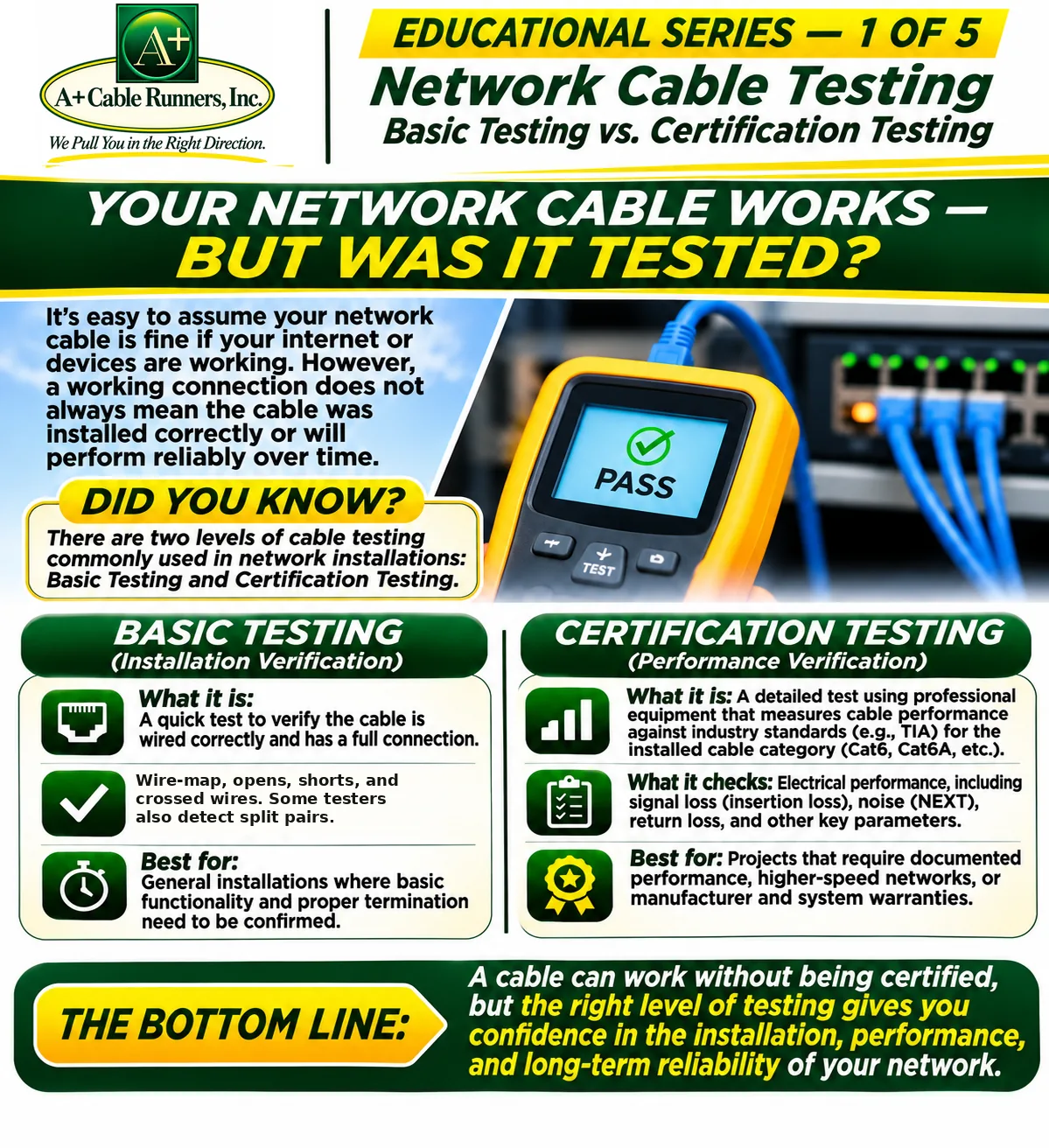
This is the first post in our five-part Network Cable Testing educational series.
It's easy to assume your network cable is fine if your internet or devices are working. However, a working connection does not always mean the cable was installed correctly or will perform reliably over time. A network that runs well today says little about how the cable behind the wall was terminated, or whether it can carry the speeds it was bought for.
Did you know?
There are two levels of cable testing commonly used in network installations: basic testing and certification testing.
Fluke Networks, which makes cable test equipment, also describes a level in between, called qualification, which checks whether existing cabling can support a particular network application. Fluke lists its uses as troubleshooting, small moves and changes, temporary networks and deciding whether older cabling needs an upgrade. For new cabling, the choice usually comes down to the two levels below.
Basic testing (installation verification)
- What it is: A quick test to verify the cable is wired correctly and has a full connection.
- What it checks: Wire map, opens, shorts and crossed wires. Some testers also detect split pairs.
- Best for: General installations where basic functionality and proper termination need to be confirmed.
Wire map is the heart of a basic test. Fluke describes it as checking that each pair is connected to the right pins at the plugs and jacks, with good contacts in the terminations. A green light on a basic tester means exactly that, and no more.
Certification testing (performance verification)
- What it is: A detailed test using professional equipment that measures cable performance against industry standards (for example, TIA) for the installed cable category, such as Cat6 or Cat6A.
- What it checks: Electrical performance, including signal loss (insertion loss), noise (NEXT), return loss and other key parameters.
- Best for: Projects that require documented performance, higher-speed networks, or manufacturer and system warranties.
According to Fluke, a certification tester makes its measurements across set frequency ranges and compares them with TIA or ISO limits, and the result states whether the link passed or failed for its category, such as Category 6A. Our earlier post on cable testing versus certification explains what a PASS does and does not tell you.
The bottom line
A cable can work without being certified, but the right level of testing gives you confidence in the installation, performance and long-term reliability of your network.
Next in the series, part two: Basic Testing vs. Certified Testing: What's the Difference? To see the cabling work we do, visit our computer network cabling page.
Educational information only. Cabling requirements and performance depend on the installation, equipment, applicable standards and intended application. This is not a substitute for project-specific design or engineering. Always follow applicable codes and manufacturer instructions, and verify project requirements individually.