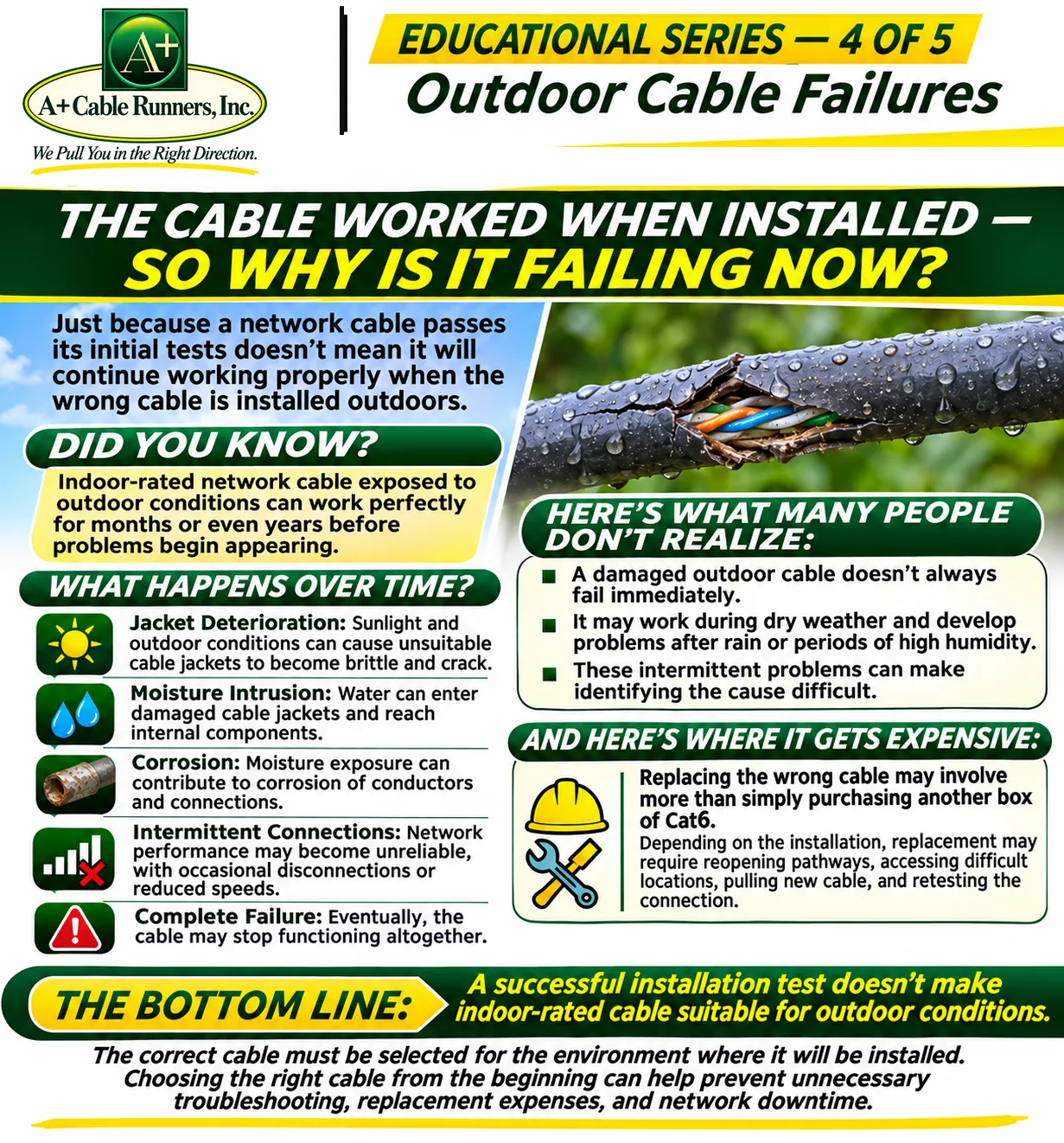
This is the fourth post in our five-part educational series, Indoor Cable Used Outdoors.
Just because a network cable passes its initial tests doesn't mean it will continue working properly when the wrong cable is installed outdoors. Indoor-rated network cable exposed to outdoor conditions can work perfectly for months or even years before problems begin appearing.
What happens over time?
- Jacket deterioration. Sunlight and outdoor conditions can cause unsuitable cable jackets to become brittle and crack.
- Moisture intrusion. Water can enter damaged cable jackets and reach internal components.
- Corrosion. Moisture exposure can contribute to corrosion of conductors and connections.
- Intermittent connections. Network performance may become unreliable, with occasional disconnections or reduced speeds.
- Complete failure. Eventually, the cable may stop functioning altogether.
The first step is the jacket. Belden's technical bulletin on outdoor suitability explains that the ultraviolet part of sunlight tends to damage a cable's jacket, and that heat, including heat from the sun, accelerates aging and can lead to brittleness and cracking. Once the jacket is open, the rest of the list follows. Parts two and three of this series, on sun damage and moisture inside outdoor conduit, cover how each one starts.
Here's what many people don't realize
- A damaged outdoor cable doesn't always fail immediately.
- It may work during dry weather and develop problems after rain or periods of high humidity.
- These intermittent problems can make identifying the cause difficult.
That last point is what makes this kind of failure expensive. A connection that drops only some of the time can get blamed on the switch, the camera or the internet provider first. If an outdoor link misbehaves after wet weather, the cable run itself deserves a look.
A passing test is a snapshot
A cable test tells you how the link performed on the day it was tested. It can't tell you whether the cable's jacket is rated for the sun, rain and heat it will see over the next several years. Our post on cable testing versus certification explains what those tests do and don't cover.
And here's where it gets expensive
Replacing the wrong cable may involve more than simply purchasing another box of Cat6. Depending on the installation, replacement may require reopening pathways, accessing difficult locations, pulling new cable and retesting the connection.
The bottom line
A successful installation test doesn't make indoor-rated cable suitable for outdoor conditions. The correct cable must be selected for the environment where it will be installed. Choosing the right cable from the beginning can help prevent unnecessary troubleshooting, replacement expenses and network downtime.
If you haven't looked at your outdoor cable runs since summer, our post on checking low-voltage systems after hurricane season lists what to look for. To see the cabling work we do, visit our computer network cabling page.
Next, the final part of the series: Five Questions to Ask Before Installing Network Cable Outdoors.
Information is provided for general education. It is not a substitute for project-specific design, engineering or manufacturer instructions. Always follow applicable codes and listed system requirements. Project requirements should be verified individually.