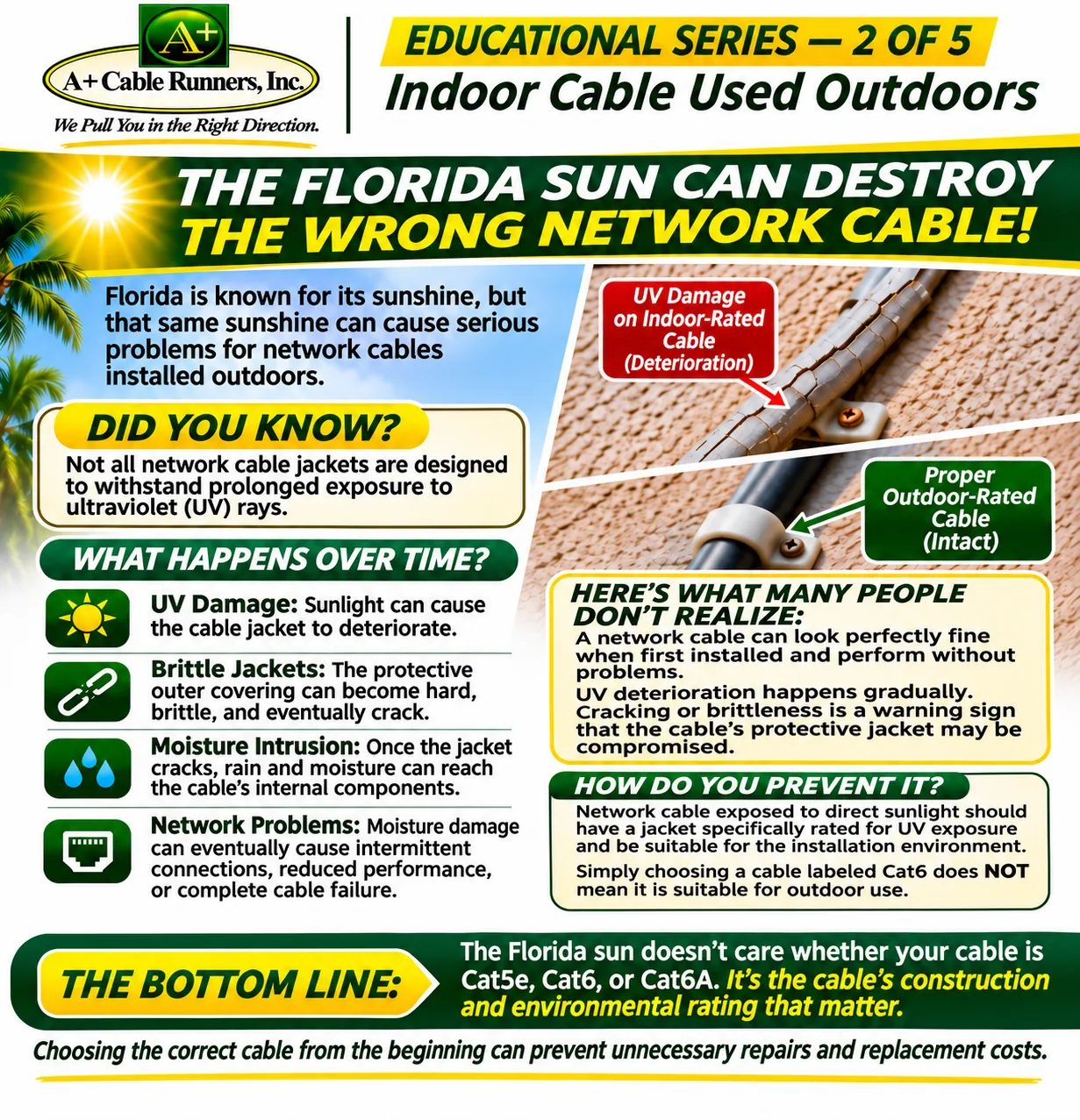
This is the second post in our five-part educational series, Indoor Cable Used Outdoors.
Florida is known for its sunshine, but that same sunshine can cause serious problems for network cables installed outdoors. Cable runs along exterior walls, rooflines and soffits, and out to equipment mounted outside, spend years in direct sun. Whether that cable lasts depends on what its jacket is made to handle.
Did you know?
Not all network cable jackets are designed to withstand prolonged exposure to ultraviolet (UV) rays. Belden's technical bulletin on outdoor suitability names the UV part of sunlight as the main concern for an outdoor cable, because it tends to damage the jacket, and says the jacket material of an outdoor cable must be resistant to UV. That resistance can be tested by exposing the material or cable to an artificial UV source for a length of time. Cable built for outdoor service says so in its specifications. Superior Essex, for example, describes the black polyethylene outer jacket of its outside plant cable as made for sunlight and weather resistance.
What happens over time?
- UV damage. Sunlight can cause the cable jacket to deteriorate.
- Brittle jackets. The protective outer covering can become hard, brittle and eventually crack.
- Moisture intrusion. Once the jacket cracks, rain and moisture can reach the cable's internal components.
- Network problems. Moisture damage can eventually cause intermittent connections, reduced performance or complete cable failure.
Heat adds to it. The same Belden bulletin notes that high temperatures, including heat from the sun, accelerate a cable's aging and can lead to brittleness and cracking of the jacket or insulation.
Here's what many people don't realize
A network cable can look perfectly fine when first installed and perform without problems. UV deterioration happens gradually. Cracking or brittleness is a warning sign that the cable's protective jacket may be compromised. If you have cable running in the sun on your building, it is worth a look the next time someone is up there.
How do you prevent it?
Network cable exposed to direct sunlight should have a jacket specifically rated for UV exposure and be suitable for the installation environment. Simply choosing a cable labeled Cat6 does not mean it is suitable for outdoor use. The category tells you about the cable's performance. The jacket and the manufacturer's environmental rating tell you where it can go.
The bottom line
The Florida sun doesn't care whether your cable is Cat5e, Cat6 or Cat6A. It's the cable's construction and environmental rating that matter. Choosing the correct cable from the beginning can prevent unnecessary repairs and replacement costs.
Part one of this series, indoor network cable used outdoors, covers moisture and temperature as well as sunlight. Our post on the hidden cost of cheap network cable explains the other differences between cables that look alike. To see the cabling work we do, visit our computer network cabling page.
Next in the series, part three: Outdoor Conduit Doesn't Mean the Cable Stays Dry.
Information is provided for general education. It is not a substitute for project-specific design, engineering or manufacturer instructions. Always follow applicable codes and listed system requirements. Project requirements should be verified individually.